

Pinktober's almost over. Here's why breast health can't be a once-a-year thing, and the five minutes every woman can give.
It Starts With a Ribbon
We’re into the last stretch of Pinktober, breast cancer awareness month. For the past few weeks, you’ve seen pink ribbons on just about everything: your feed, your colleague’s lanyard. And you’ve definitely seen, or better yet, eaten a pink pastry by now.
And that’s a good thing. Awareness is where it all starts. But a ribbon pinned to your shirt can’t tell you whether something in your body has changed. That part is still on you, and it takes a lot less time than most people think. Five minutes, to be exact.
So before Pinktober wraps up, we want to go beyond the ribbon. We’ll talk about why catching breast cancer early matters so much, what we here at MAKNA do about it all year round, and the five minutes every woman can give.
Timing Is Everything
Breast cancer is the most common cancer among Malaysian women. And with breast cancer, when it’s found makes all the difference.
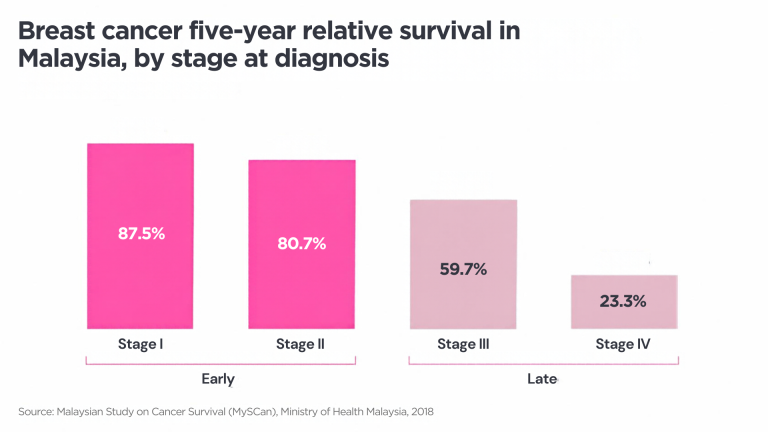
To understand why, it helps to look at the numbers. The most recent national breakdown comes from the Ministry of Health, which followed Malaysians diagnosed with cancer between 2007 and 2011 to see how they were doing five years later. For breast cancer, the pattern is hard to miss. Women whose cancer was found at stage I had a five-year survival rate of 87.5%. At stage II, it was 80.7%. By stage III, that had fallen to 59.7%, and at stage IV, it was just 23.3%.
Put another way, nearly 9 in 10 women diagnosed at stage I survived at least five years. At stage IV, it was fewer than 1 in 4. That gap is the whole reason we keep harping on about early detection.
Yet more than half of breast cancer cases in Malaysia are still diagnosed at stage III or IV. According to the latest national cancer registry report, covering 2017 to 2021, the figure was 50.5%. We dug into the bigger picture in our piece on Southeast Asia’s breast cancer gap. But Dr Shaminee Chandran, a medical officer with MAKNA’s Cancer Screening Unit, puts one part of it simply:
In Malaysia, breast cancer screening is not yet implemented as a comprehensive, population-based programme that systematically invites all eligible women for regular screening.
In other words, nobody’s sending you a reminder. Many women only see a doctor once they notice something wrong. Others, she says, don’t think screening is necessary when they feel healthy. And then there’s distance, cost, anxiety, or simply not knowing where to start.
So what does catching it early actually look like? Most of the time, it looks like a mammogram.
A mammogram is an X-ray of the breast, and it can pick up changes before you’d ever feel them.
“A mammogram is a quick procedure that can help detect breast cancer before it becomes noticeable,” Dr Shaminee says. “When breast cancer is detected early, treatment is often more effective, and women have a better chance of a positive outcome.”
Bringing the Mammogram to Her
So if women aren’t coming in, someone has to go out and find them. That’s what MAKNA’s Cancer Screening Unit does.
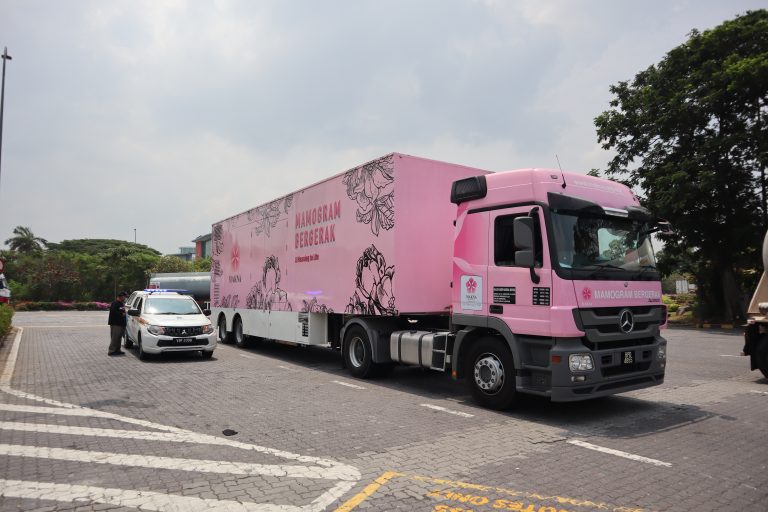
We run three mobile mammogram units covering Peninsular Malaysia, Sarawak, and Sabah. Each one is a 40-foot trailer pulled by a prime mover. Picture a lorry, but pink, with a mammogram machine inside.
Last year alone, the units spent 188 days screening, did 8,242 mammograms, and found 26 breast cancers, 18 of them at an early stage. Since our first unit hit the road in 2011, they’ve done more than 59,000 mammograms.
In West Coast Sabah, where rural communities face real geographical barriers to hospital screening, our unit did 4,642 mammograms between 2023 and 2025. That’s more than two of the area’s hospitals combined.
“In simple terms, our programme casts a wider net,” Dr Shaminee explains. “We are not necessarily expecting to find cancer in every group we screen; instead, we aim to make screening accessible to women who might otherwise have limited opportunities to get screened.”
What Actually Happens on the Truck
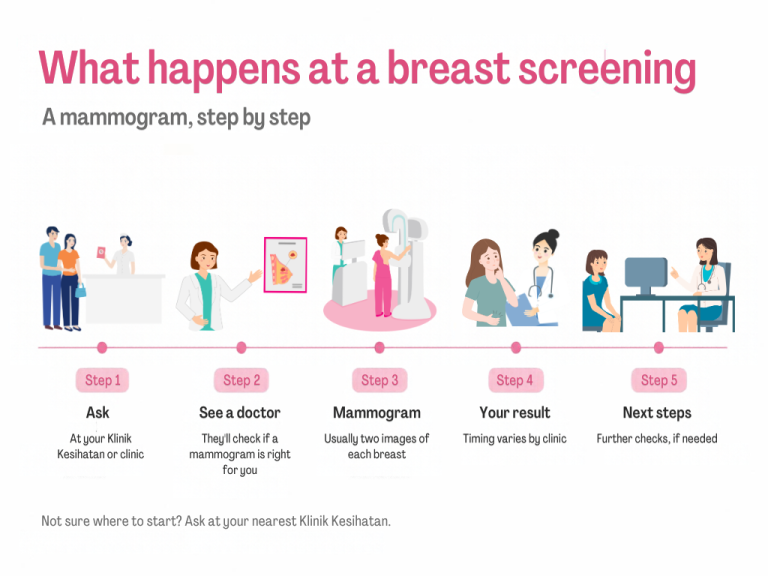
For the women who come, it’s simple. Screening is free for women aged 40 and above from B40 households. A radiographer takes four images, two of each breast, and the results usually come back within about an hour. If anything needs a closer look, the team refers her to the hospital and checks in on her afterwards. And if she has a clinical breast examination, it’s only ever done by a female nurse.
All of this is paid for out of MAKNA’s own funds, which come from everyday donors. To put that into perspective, one trip to Sabah or Sarawak screens more than 200 women over about a week of screening.
All The Way To Hong Kong
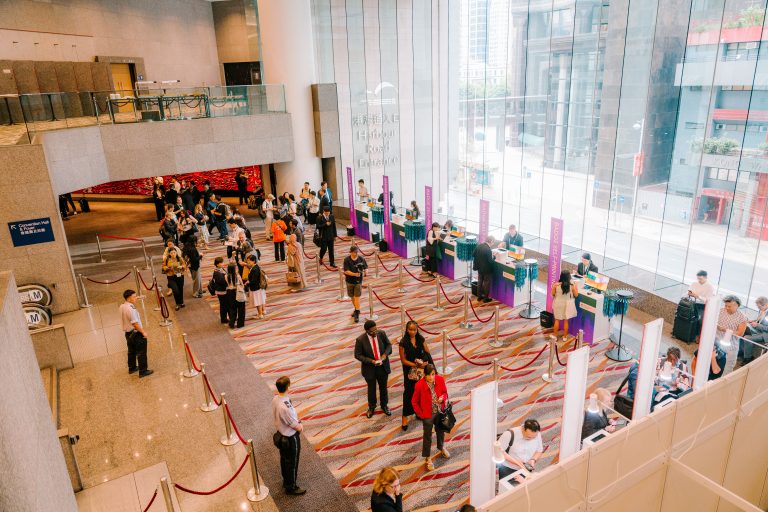
In September, Dr Shaminee presented our Sabah screening results at the World Cancer Congress 2026 in Hong Kong, the culmination of our screening team’s effort.
The rooms were full of people coming at cancer from every direction: oncologists who’ve given their whole careers to it, programme directors from the WHO, nurses, patient advocates, and survivors, from all over the world. Sitting among them, you couldn’t help but feel like you were part of something much bigger.
She felt it too.
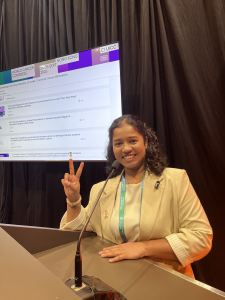
If there was one feeling that stood out, it was a sense of solidarity. Although we may work in different countries and face different challenges, we share a common goal.
Five Minutes, That's All
Closing the gap on distance and cost is our job. But there’s a part only you can play, and it’s smaller than you’d think.
Dr Shaminee shares the story of a woman who once had a mammogram at one of our screening events. Her result was normal. A few years later, she came back to another event to tell the team what had happened since.
After that first visit, she’d started checking her breasts every month. One day, she found a lump. Because she’d been through a mammogram before, she wasn’t as scared of it, and she knew exactly what to do next. She was diagnosed with stage I breast cancer, and she has since completed her treatment.
She told the team she might never have checked her breasts, or found the courage to get a mammogram, if not for that first visit.
Sometimes, what we share in a single encounter can stay with someone for years, giving her the knowledge and confidence to take action when it matters most.
— Dr Shaminee Chandran
That’s why our doctors keep their advice this simple:
Five minutes a month to check your breasts.
Five minutes every two years for a mammogram.
Five minutes to remind a mother, sister, daughter, friend, or loved one to take care of her breast health.
What to Look Out For
The first five minutes is the easiest to start. Dr Shaminee calls it breast self-awareness: getting to know what’s normal for you, so you’ll notice when something changes. No special technique needed. See a doctor if you notice:
- a new lump or thickening in the breast or armpit
- a change in the size or shape of a breast
- dimpling or pitting of the skin, like orange peel
- a nipple that turns inward
- discharge from the nipple that isn’t breast milk
- redness, scaliness, or a change in colour of the breast or nipple
Don’t panic if you do find something. Most of these changes turn out not to be cancer. The World Health Organization says as many as 90% of breast lumps aren’t. But every change is worth getting checked.
If you’d like a visual guide, Know Your Lemons uses lemons to show what each sign looks like, plus how to check yourself step by step. No medical jargon, we promise. They also have a free app that’ll remind you to check yourself every month, so you don’t have to remember the first five minutes on your own.
And no, checking yourself doesn’t replace a mammogram. A mammogram can find cancers that are still too small to feel, which is why the American Cancer Society recommends doing both.
Final Thoughts
So before the pink pastries run out and the ribbons go back in the drawer, make a little time for yourself.
If you’re 40 or over and have never had a mammogram, ask about getting one at your nearest Klinik Kesihatan. And if you know someone who hasn’t, well, that’s your third five minutes sorted.
Thanks for reading!
If you believe in the work MAKNA does, consider supporting us. Screening is only one part of it. We also run a bursary programme, home-care nursing, and education and awareness programmes, all for B40 patients and families who need the help most. Every contribution helps us reach more women, more families, and more communities.